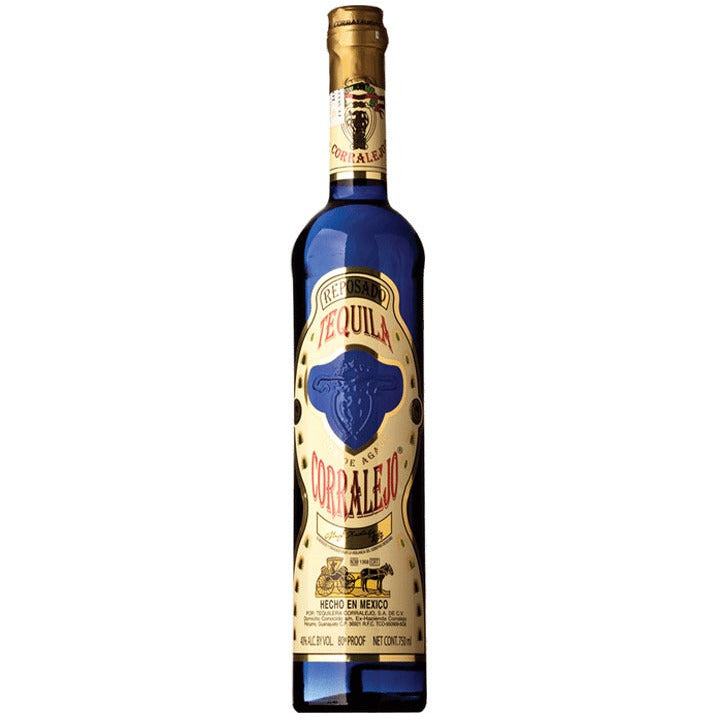
Corralejo Reposado Tequila is produced at Hacienda Corralejo in Penjamo, Guanajuato — one of the oldest tequila distilleries in Mexico, operating since 1755 and the site where Miguel Hidalgo, father of Mexican independence, was a frequent visitor. 100% Blue Weber agave, aged 4 months in a combination of American, French, and Canadian oak barrels at the historic estate hacienda.
The triple-barrel aging approach — American, French, and Canadian oak simultaneously — is unusual and deliberate: each wood type contributes differently. American oak adds vanilla and coconut character, French oak contributes lighter, more delicate spice and dried fruit, and Canadian oak adds a softer, subtler wood note. Four months in this combination produces a reposado with more complex oak layering than single-barrel aging, while the brief duration keeps the agave character the dominant note. The result is a reposado with a distinctively pale rose-gold color, herbaceous minerality from Guanajuato agave, and a finish with white pepper and light berry character.
Tasting Notes
Nose: Pale rose-gold. Mild herbaceous agave, basil, and slate-like minerality. Palate: Light and silky — cedar, coconut, and honey from the triple-barrel combination, with the slate mineral character of Guanajuato agave throughout. Finish: White pepper, light raspberry, and a clean, dry fade.
Specs
Distillery: Hacienda Corralejo, Penjamo, Guanajuato, Mexico (est. 1755) — Agave: 100% Blue Weber — Aging: 4 months, American + French + Canadian oak — ABV: 40% — Size: 750ml
Browse all tequila at Wooden Cork.
Frequently Asked Questions
What makes Corralejo different from other reposado tequilas?
Two distinguishing factors: origin and aging. Corralejo is produced in Guanajuato rather than Jalisco — one of the few tequila producers outside the traditional Jalisco heartland. Guanajuato is an authorized tequila appellation region, and its agave develops a slightly different mineral character from the state’s soil composition compared to Jalisco lowland or highland agave. The triple-barrel aging — American, French, and Canadian oak simultaneously — is unusual and produces more layered oak complexity than single-barrel reposado aging. The combination of non-Jalisco terroir and multi-barrel aging produces a reposado that tastes noticeably different from mainstream Jalisco expressions at the same price point.