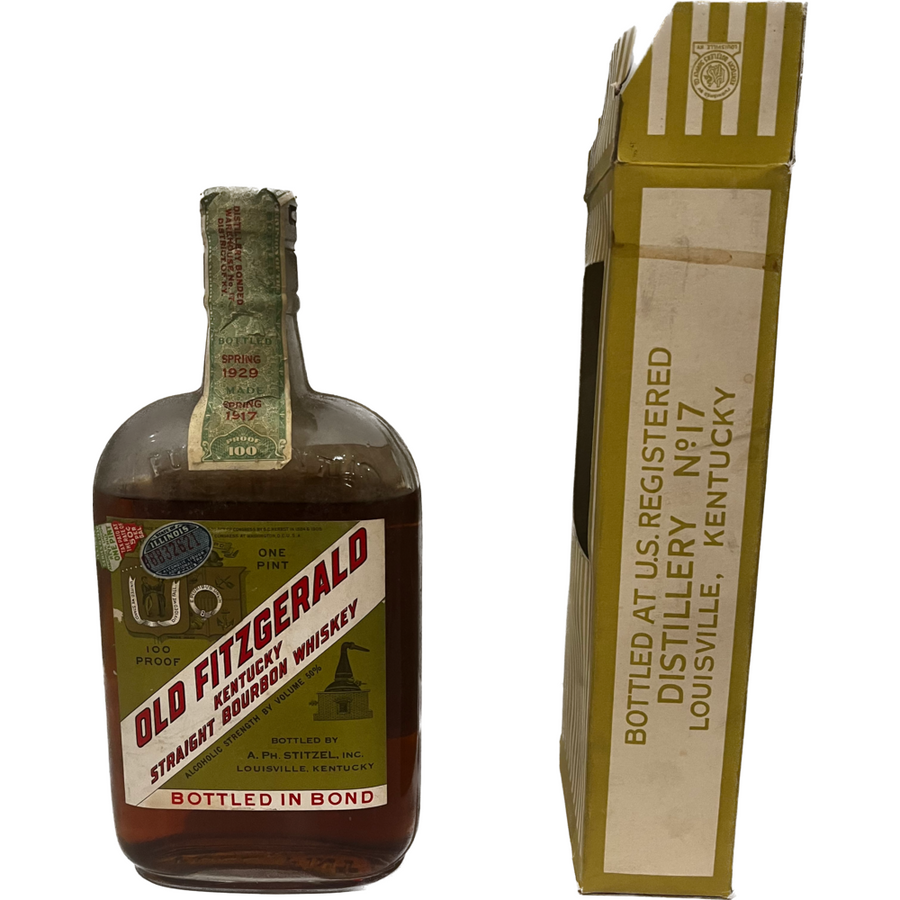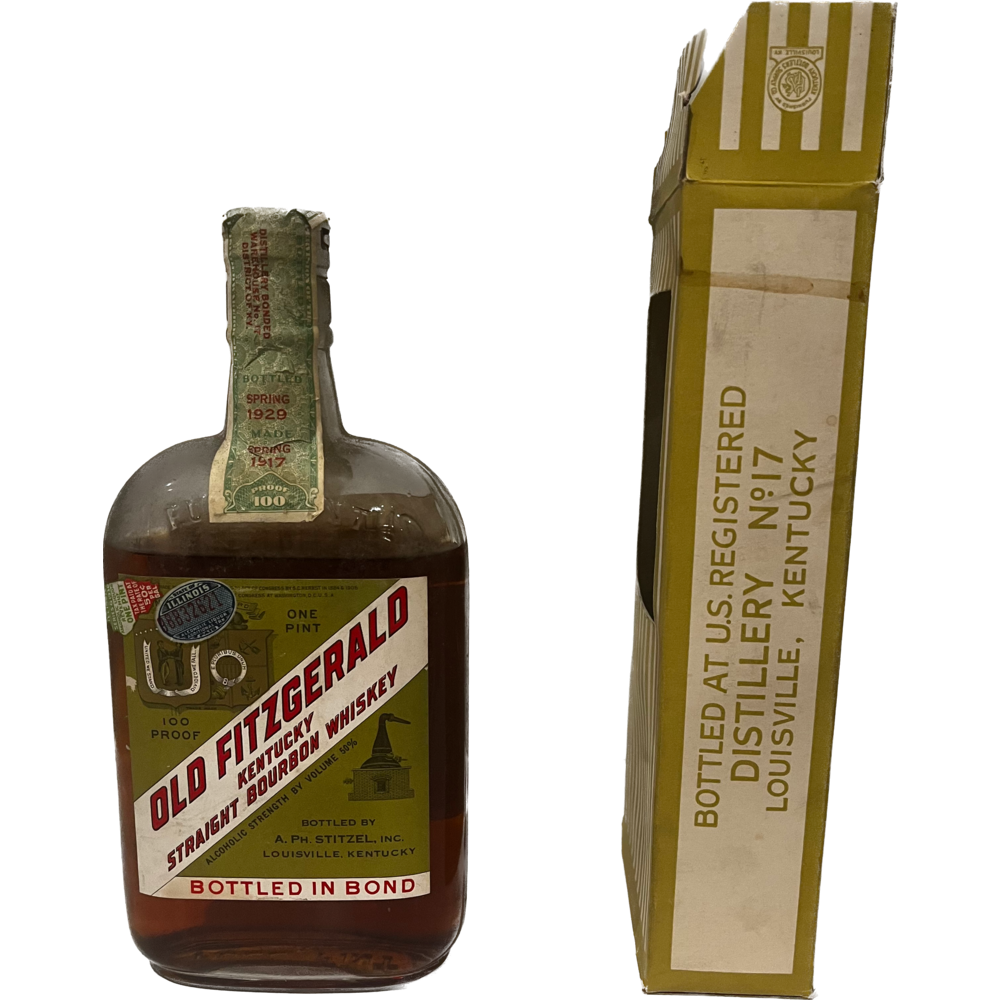
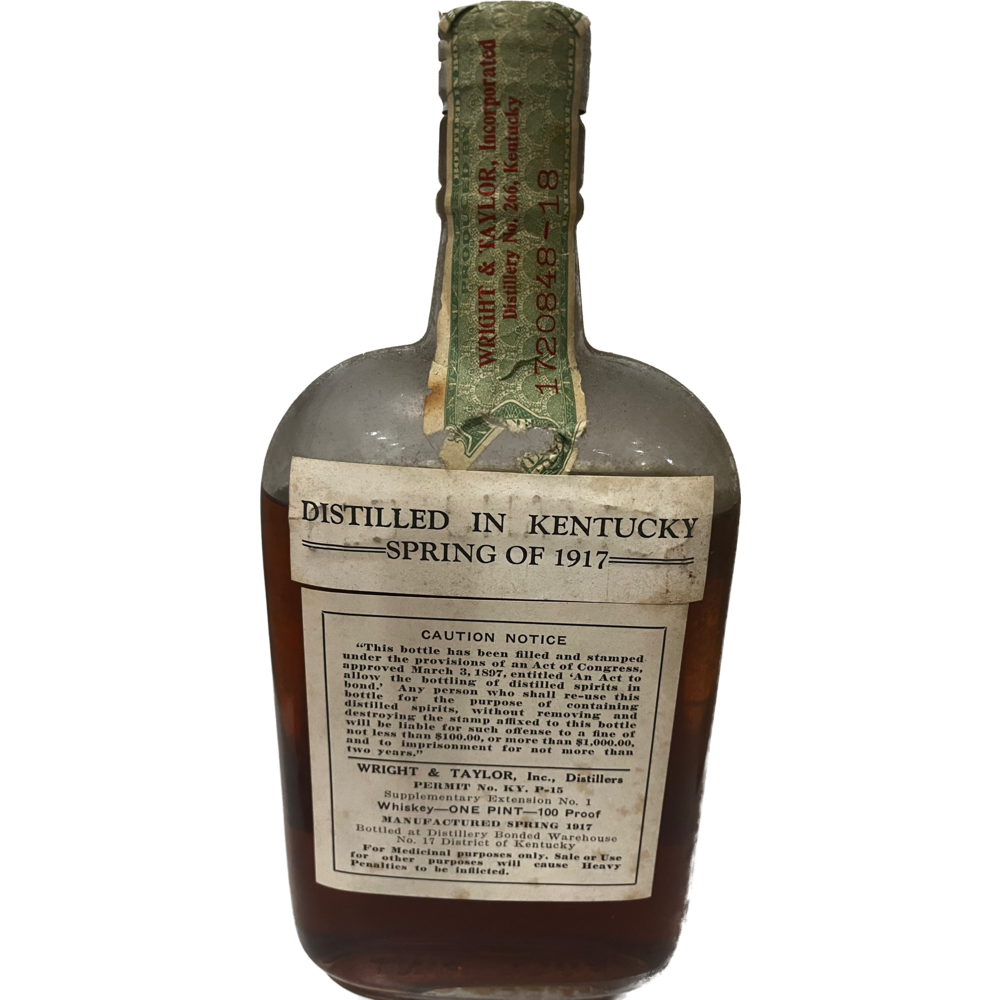


Genuine pre-Prohibition era whiskey. Old Fitzgerald produced between 1917 and 1929 — distilled at the original Stitzel distillery in Louisville before the Volstead Act and the decade-long gap in American whiskey production it created. One of the rarest surviving examples of authentic American whiskey from this foundational era.
Prohibition ran from January 1920 to December 1933. The Volstead Act effectively ended commercial American whiskey production for over a decade, destroying most distillery infrastructure and consuming the vast majority of pre-Prohibition stocks through attrition, seizure, and the limited "medicinal whiskey" exemptions that allowed a handful of warehoused barrels to be sold under physician prescription. What survived is finite, unrepeatable, and diminishing with every passing year.
Old Fitzgerald was produced by the Stitzel Distillery — the operation founded by the Stitzel family in Louisville that would later merge with W.L. Weller & Sons in 1933 to form the legendary Stitzel-Weller Distillery, which produced the Van Winkle family bourbons and Old Fitzgerald until 1992. This pre-Prohibition Old Fitzgerald predates even that merger — it is whiskey from the original Stitzel operation, before Prohibition, before Stitzel-Weller, before the modern bourbon era. The production equipment, the grain sourcing, the barrel-making practices, and the distillation methods of 1917–1929 have no modern equivalent.
Historical Context
- Distilled: 1917–1929 (pre-Prohibition and early Prohibition era)
- Producer: Stitzel Distillery, Louisville, Kentucky
- Historical significance: Pre-dates the Stitzel-Weller merger (1933) and the entire post-Prohibition bourbon era
- Size: 750ml
Browse all bourbon at Wooden Cork or explore our rare spirits collection.
Frequently Asked Questions
- What is the significance of pre-Prohibition American whiskey? Prohibition (1920–1933) destroyed the vast majority of America's existing whiskey infrastructure and consumed nearly all pre-existing stocks. What survived did so through a combination of warehoused medical exemption stocks and private cellaring. Pre-Prohibition whiskey represents a completely different production era — different equipment, different grain varieties, different barrel practices — that cannot be replicated. Every surviving bottle from this era is one of a finite number that will never be replenished.
- What was the original Stitzel Distillery? The Stitzel Distillery was founded by the Stitzel family in Louisville, Kentucky. In 1933 — the year Prohibition ended — it merged with W.L. Weller & Sons to form Stitzel-Weller, the legendary Louisville distillery that produced Pappy Van Winkle, Old Fitzgerald, W.L. Weller, and Rebel Yell until closing in 1992. This Old Fitzgerald predates even the Stitzel-Weller era — it is from the original pre-merger Stitzel operation.
- How is provenance verified for pre-Prohibition whiskey? Pre-Prohibition whiskey bottles are identified through original labels, tax stamps, bottle glass characteristics, and documented provenance chains. The original label, capsule, and tax strip information provide the primary authentication indicators.
- Can pre-Prohibition bourbon still be drunk? Properly stored whiskey does not go bad — the ethanol preserves the liquid essentially indefinitely. Pre-Prohibition bourbon in original sealed bottles from documented sources is fully drinkable, though most serious collectors treat surviving bottles as historical artifacts rather than consumables.
Unfortunately, we can't ship to PO Boxes and APO addresses.
NOTE: Not Eligible for Return
By placing this item in your cart, you acknowledge that you are 21 years or older. A valid government issued ID (i.e. a valid driver's license, passport, or US Military ID) will be checked at the time of delivery to verify your age. If you do not provide a valid ID, we will not be able to deliver your order.