Stranahan's
6 products


6 products
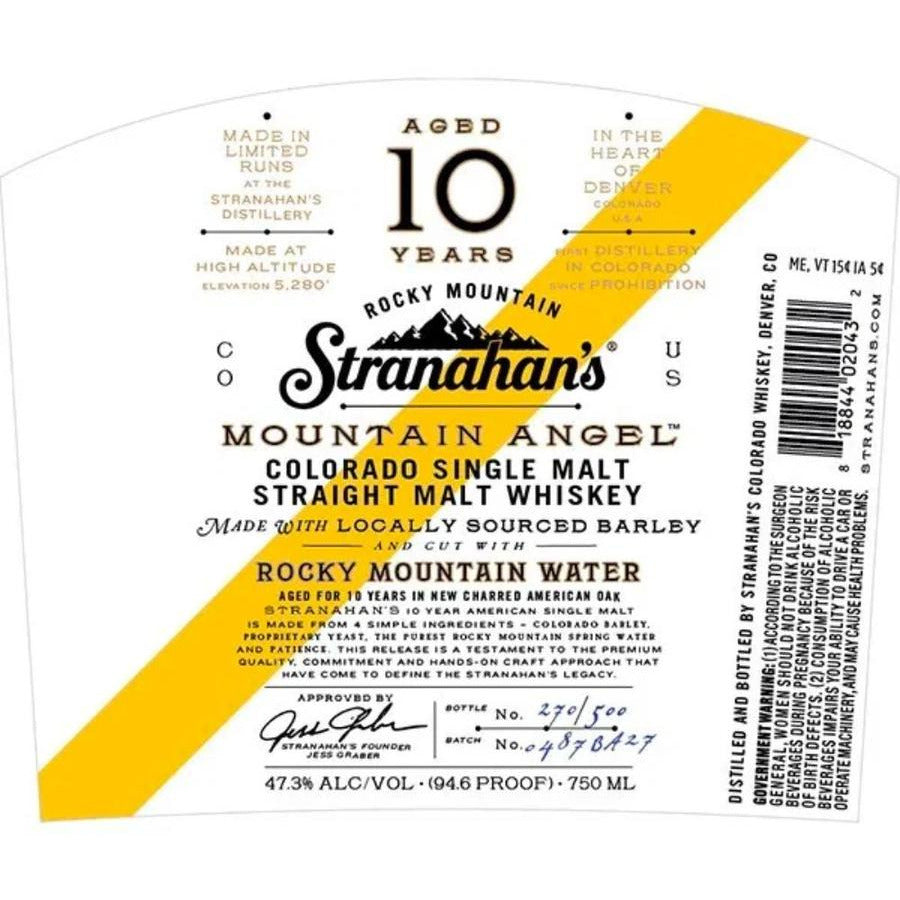
Stranahan’s Colorado Whiskey pioneered the American single malt category — batch-distilled in Denver from 100% malted barley and aged in new American oak barrels. Rocky Mountain spring water and Denver’s climate accelerate barrel interaction. Range: Original (flagship, 4+ years, bold and smooth), Snowflake (annual limited, unique finish each year), Sherry Cask, and Diamond Peak.
Browse all American whiskey and rare and allocated bottles at Wooden Cork.
American single malt whiskey and Scotch single malt share the same base grain — 100% malted barley — and the same distillery-specific production requirement, but they are produced under entirely different regulatory frameworks that produce fundamentally different spirits. Scotch single malt must be aged in Scotland in used oak casks (typically ex-bourbon barrels or ex-Sherry butts) for a minimum of three years. American single malt faces no equivalent cask restriction — Stranahan’s uses new American white oak barrels, the same cooperage required for bourbon, which contributes a dramatically more intense vanilla, caramel, and toasted oak character than used oak provides. New American oak releases fresh wood compounds that used barrels have already largely given up, meaning Stranahan’s develops its wood-derived character faster and more intensely than a comparable-age Scotch single malt. The result is a whiskey that tastes like a hybrid between Scotch’s grain-forward malted barley complexity and bourbon’s oak-driven sweetness — occupying a genuinely distinct sensory space that neither category alone produces. Stranahan’s was one of the earliest producers to define this space commercially, making it foundational to understanding what American single malt is and what it can be.
Denver sits at 5,280 feet elevation with a semi-arid climate — cold dry winters and warm summers with significant seasonal temperature variation. This combination affects whiskey aging in two related ways. First, the temperature swings cycle the spirit more actively in and out of the barrel wood than a more moderate climate would produce, driving more extraction of vanilla, caramel, and oak compounds per year of aging than a coastal or cellar-aged whiskey would achieve. Second, the low humidity and high altitude mean the “angels’ share” evaporation is dominated by water loss rather than alcohol loss, concentrating the remaining spirit’s proof and flavor intensity. These conditions mean Stranahan’s can develop complex wood integration at 4–6 years that might take 8–10 years in a humid, temperate aging environment. The Original’s 4+ year age statement delivers character that would surprise drinkers expecting younger-tasting whiskey — the Denver climate is doing substantial aging work that raw age statements don’t fully capture.